Olympic Countdown 3 (2009) UK £5 Coin: Collector Guide
The Olympic Countdown 3 coin is the first release in The Royal Mint’s four-coin
Countdown to London 2012 £5 series. Dated 2009, it kicks off the “3, 2, 1, Games Time”
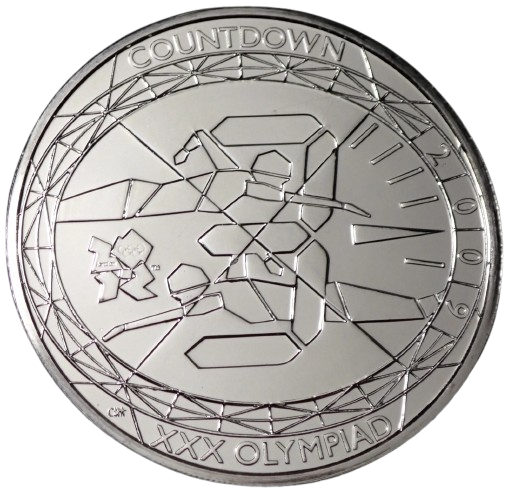
run-up with a bold, modern sports design: swimmers in motion with a big digitised 3 layered over the scene.
It’s a proper time capsule from the build-up to London 2012, and a fun entry point if you like collecting themed mini-sets.
Important practical note: this is a £5 crown-style commemorative. It’s legal tender, but it was mainly sold in packs
and is rarely encountered in everyday change.
Quick facts
| Denomination |
£5 (Five Pounds) |
| Year |
2009 |
| Theme |
3-year countdown to the London 2012 Olympic Games |
| Reverse design |
Two swimmers with a digitised “3”, London 2012 logo, and XXX Olympiad legends |
| Reverse designer |
Claire Aldridge |
| Obverse |
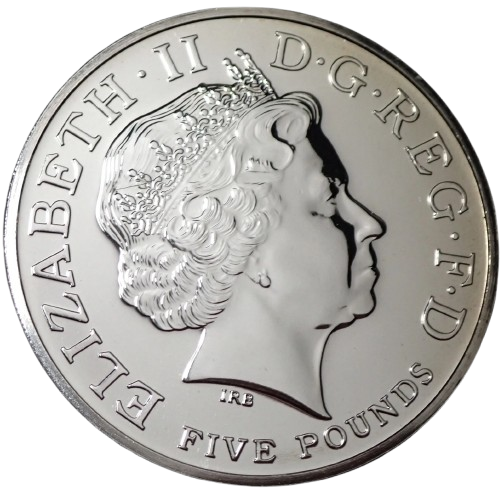
Queen Elizabeth II (Ian Rank-Broadley portrait) |
| Composition |
Cupro-nickel |
| Diameter |
38.61 mm |
| Weight |
28.28 g |
| Thickness |
2.89 mm |
| Edge |
Reeded |
| Mintage (base cupro-nickel issue) |
184,921 |
Specs and the standard issue format (cupro-nickel, 38.61 mm, 28.28 g, reeded edge) are documented in cataloguing references.
The mintage figure (184,921) is also widely listed in reference tables for UK £5 designs.
What “Countdown 3” actually means
The name is literal: three years to go until the London 2012 Olympics. The Royal Mint built a neat little narrative arc:
one £5 coin per year, each one featuring a different sport, stepping down through the numbers.
This 2009 coin is the start of that arc, so it has a tiny bit of “series opener” charm.
The series line-up, as described when the final coin launched, runs:
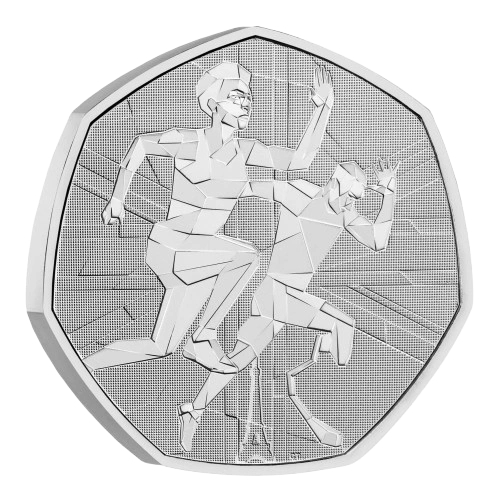
2009 Swimming (3), 2010 Running (2), 2011 Cycling (1), then the 2012 “Games Time” finale.
In collector terms, that means this coin is often the first one people buy when they decide to complete the set.
Design breakdown: why it looks the way it looks
Reverse: swimmers plus a digitised “3”
The reverse is all about speed and modernity. The swimmers are stylised rather than photorealistic, and the number 3
is rendered in a digital, scoreboard-like style. That mix is deliberate: Olympic sport (timing, lanes, racing) meets the visual language
of a countdown clock.
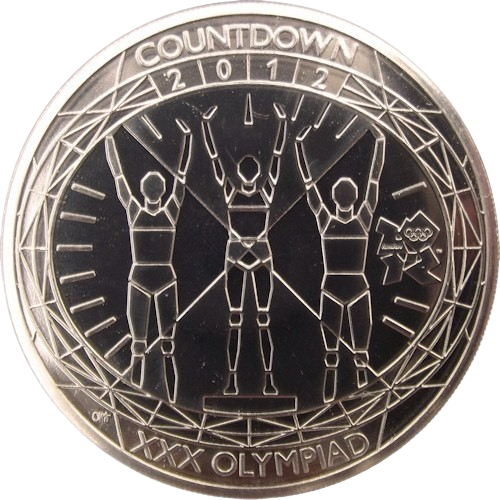
Around the design you’ll typically see the key text elements associated with the series, including COUNTDOWN,
the date 2009, the London 2012 emblem, and XXX Olympiad references.
If you are checking a coin quickly, the easiest identifiers are: swimmers + big “3” + London 2012 logo.
Obverse: the Rank-Broadley Elizabeth II portrait
The obverse uses the fourth crowned portrait of Queen Elizabeth II by Ian Rank-Broadley, the same portrait seen across
many UK coins of that era. On £5 pieces, the legend normally includes the denomination FIVE POUNDS on the obverse.
Edge: reeded, not inscribed
Unlike many £2 coins where edge lettering is part of the “personality”, this issue is listed with a reeded edge.
That makes identification simple: you do not need to hunt for an edge inscription to confirm the type.
Mintage and rarity: scarce-ish, but not a unicorn
The commonly cited mintage for the 2009 “Countdown to 2012: 3” £5 design is 184,921.
For a £5 commemorative, that’s not ultra-low, but it is also not “everywhere”. These were mainly sold rather than circulated,
so availability is driven by how many people kept them in folders, coin packs, drawers, and inherited collections.
A subtle collector point: because this is the first coin in a short four-coin run, it tends to get steady demand from
completionists. The finale coin gets attention too, but the first coin is where set-building starts.
How to collect it without overpaying
Since you usually won’t find this in circulation, collecting is mostly a question of choosing the right format and condition.
A few practical guidelines:
1) Decide what “version” you want
The core coin is cupro-nickel, typically sold in presentation packs. There are also precious metal versions produced for collectors,
including silver proof, silver piedfort, and gold proof editions.
If your goal is simply “own the design”, the standard cupro-nickel issue is the sensible pick.
2) Condition matters more than people expect with £5 coins
£5 crowns are big. Big coins pick up big scuffs if they bounce around loose.
If you’re buying a cupro-nickel example, aim for a clean one that still has good surface lustre and sharp details in the swimmers.
For proofs, look for flawless mirrored fields and crisp frosting, and insist on clear photos.
3) Packaging can be a value marker
Many examples were sold in official packs (folder style, card packs, and similar), and coins kept in those packs tend to stay nicer.
If two listings are similar in price, choose the one with better surfaces, not the one with the more dramatic description.
4) Remember the “£5 coin reality”
These are legal tender, but they’re primarily collected as souvenirs and are rarely used day-to-day.
That means the market behaves more like collectibles than like circulating coinage: condition and presentation do a lot of the heavy lifting.
Value and demand: what drives the price
Prices swing based on condition, packaging, and whether the coin is part of a complete set.
A standard cupro-nickel example often sits in that familiar “affordable commemorative” zone, while proofs (especially gold) are a different league.
The biggest price drivers are:
- Completeness: sellers offering the full 3-2-1-2012 set often attract stronger interest than single coins.
- Condition: hazy fields, heavy contact marks, or fingerprints can knock desirability down fast.
- Metal and finish: proofs carry premiums because they are struck to higher standards and limited separately.
- Olympics nostalgia: London 2012 remains a cultural high point, and that keeps the theme perennially collectable.
The sensible way to think about it: the base coin is a nice, widely collectable £5, and it becomes more interesting when you
treat it as part of the series rather than a standalone rarity monster.
Fast authenticity and ID checks
Fakes exist in the wider coin world, but for this type the practical risk is usually just buying a battered example described as “mint”.
Still, here’s a quick checklist to confirm you have the right coin:
- Date: 2009 on the reverse design.
- Core motif: swimmers with a prominent digitised “3”
- Size feel: the standard £5 crown size is large (38.61 mm) and fairly heavy (28.28 g).
- Edge: reeded.
- Obverse: Rank-Broadley Elizabeth II portrait for this era.
If you see “Countdown 3” described as a circulating £2 coin, that’s simply a category mistake. This is a £5 commemorative issue.
Where it sits in the bigger London 2012 coin story
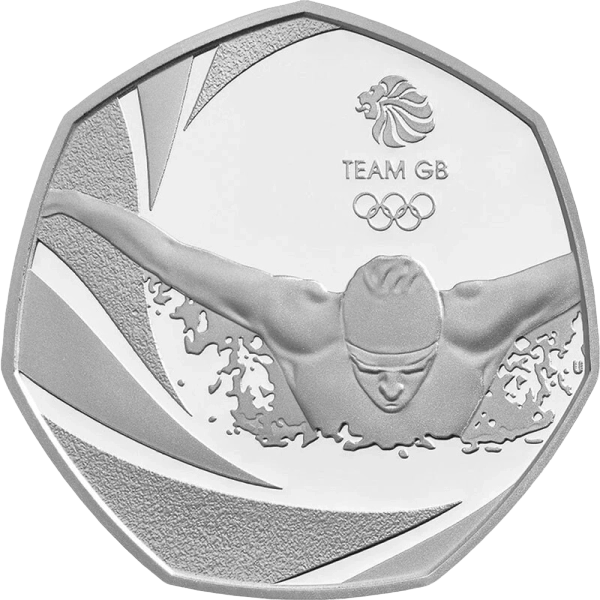
London 2012 spawned a whole ecosystem of collectables, including the famous Olympic 50p programme, medals, and multiple Royal Mint series.
The Countdown £5 set is its own clean little lane: four coins, consistent visual language, and a simple concept that looks good
in an album page or display.
The Mint’s own framing for the final release emphasised that the annual designs were meant to “capture the excitement” as the start approached,
which is basically the emotional thesis of this entire set.
Collector notes and small fun details
-
It’s a starter coin: being “coin one” in a set means it often stays liquid. People begin set-building here.
-
Sport choice matters: swimming as the opener is a smart pick. It visually reads as speed even when the design is stylised.
-
Modern design language: the digitised numeral and London 2012 emblem scream “late-2000s optimism”, in the best way.
-
Multiple collectible formats: if you ever want to level up, the same design exists in proof precious-metal issues.
FAQ
Is Olympic Countdown 3 a circulating coin?
Not really. It’s a £5 commemorative crown. It’s legal tender, but it was mainly sold as a souvenir and is rarely used in day-to-day spending.
What’s the mintage?
The commonly listed mintage for the 2009 “Countdown to 2012: 3” £5 design is 184,921.
Who designed it?
The reverse is credited to Claire Aldridge, and the obverse portrait is by Ian Rank-Broadley.
What are the other coins in the set?
The series is four annual £5 designs: 2009 swimming (3), 2010 running (2), 2011 cycling (1), and the 2012 “Games Time” finale.