Commonwealth Games - Scotland £2 Coin (2002): Collector Guide
The Commonwealth Games - Scotland £2 coin is one of those “check your change twice” pieces.
It’s part of the famous 2002 Manchester Commonwealth Games quartet, where the same core design
was issued with four different flags - one for each UK home nation. Scotland’s version is the most obtainable of the set,
but “most obtainable” is doing a lot of work here: it’s still a genuinely scarce circulating £2 coin.
Quick facts at a glance
| Coin |
£2 (Two Pounds), bimetallic circulating commemorative |
| Theme |
XVII Commonwealth Games, Manchester 2002 - Scotland |
| Year of issue |
2002 |
| Circulating mintage |
771,750 |
| Reverse design |
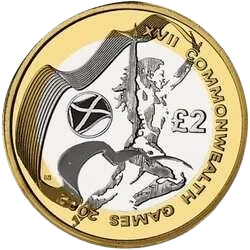
Athlete holding a banner, with the Scottish flag in the inner circle |
| Reverse designer |
Matthew Bonaccorsi |
| Obverse portrait |
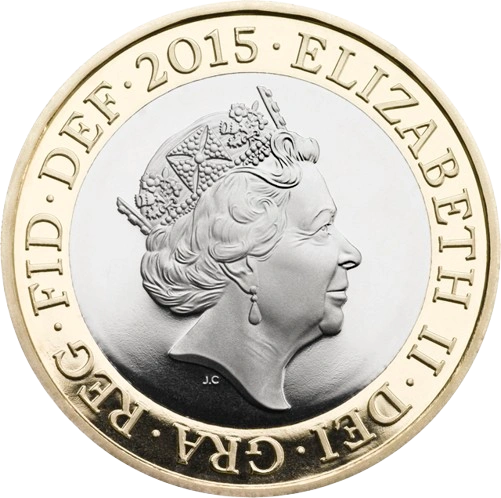
Queen Elizabeth II (Ian Rank-Broadley) |
| Edge inscription |
SPIRIT OF FRIENDSHIP, MANCHESTER 2002 |
| Standard £2 specs |
Diameter 28.4mm, weight 12.0g, thickness 2.50mm |
Why collectors care about this £2 coin
A lot of commemoratives are “nice designs” but common as rain. The Commonwealth Games set is different.
These coins were made for everyday use, not as fancy collector-only releases, yet the mintages are low enough
that many collectors still haven’t found a full set in circulation.
Scotland’s version is often called the “easiest” of the four to find, but it’s still under a million minted.
In real-world terms, that means it can take a long time to spot one in change unless you’re actively searching
(or you work somewhere that handles a lot of cash).
There’s also the set factor: once someone finds one Commonwealth Games coin, they tend to want all four.
That creates steady demand, and demand is the rocket fuel that pushes values higher even when a coin isn’t ancient.
The story behind the coin: Manchester 2002 and a UK-wide set
The 2002 Commonwealth Games in Manchester were a big deal: a major multi-sport event on home soil,
built around the idea of friendly competition and shared celebration. The £2 coin series leans into that “unity”
angle by keeping the athlete-and-banner design consistent, while swapping the inner cameo to show a different
home-nation flag.
For collectors, it’s a clever setup. You get a cohesive mini-collection (four coins, one theme), and each coin has
its own personality. Scotland’s is anchored by the Saltire in the inner circle, which stands out beautifully against
the bi-metallic contrast.
It’s also a great example of what makes modern UK coin collecting fun: you can still find these in the wild, which
turns everyday change into a small treasure hunt.
Design details: what you should see
Reverse (tails): athlete, track-lanes, and the Scottish flag
The reverse shows a figure in motion holding a banner aloft. The banner and background are divided into lines
that echo the lanes of a running track - a neat visual trick that connects the design to sport without needing
a stadium, a medal, or a list of events.
The key identifier is the flag in the inner circle. On the Scotland £2, that’s the Saltire.
Because the Commonwealth Games designs are so similar at first glance, most misidentifications happen when someone
doesn’t slow down long enough to confirm which flag they’re looking at.
Look for the denomination £2 and the text referencing the Commonwealth Games. Many genuine pieces
show some softness in the finer lines from normal circulation wear - that’s typical. What you don’t want is a coin
that looks “off” in shape, thickness, or colour balance.
Obverse (heads): Elizabeth II, Ian Rank-Broadley portrait
The obverse uses the Ian Rank-Broadley portrait of Queen Elizabeth II, which appears on many UK coins
from the late 1990s into the mid-2010s. On a normal circulated example, you’ll often see light flattening on the highest
points of the portrait and the rim before you see serious wear on the reverse.
One helpful authenticity check: genuine UK £2 coins tend to have crisp, consistent lettering on the obverse legend,
even when the fields (flat areas) show scratches and bag marks.
Edge inscription: the “read me” part of the coin
The edge inscription on this coin is a collector favourite because it feels like a motto rather than a technical note:
SPIRIT OF FRIENDSHIP, MANCHESTER 2002.
When you rotate the coin, the lettering should look clean and incuse (pressed into the edge).
Edge lettering can vary in orientation (which way up it reads) across genuine coins. That’s normal.
What’s not normal is missing edge text, sloppy spacing, or edge text that looks “printed” rather than struck.
Specifications: the standard £2 coin format
This issue uses the modern bimetallic £2 format introduced for UK circulation in the late 1990s.
It has a gold-coloured outer ring and a silver-coloured inner disc. The outer ring is nickel-brass and the centre
is cupro-nickel - a practical choice for durability and recognisable colour contrast.
- Diameter: 28.4mm
- Weight: 12.0g
- Thickness: 2.50mm
- Construction: bimetallic (outer ring + inner disc)
- Edge: milled with incuse lettering
If a coin feels dramatically lighter, thicker, or oddly “dead” when tapped compared to another £2, treat it as suspicious.
Most people never need to worry about fakes, but the Commonwealth Games set is popular enough that it’s worth being alert
when buying online.
Mintage and rarity: scarce, even as the “most common” of the set
The circulating mintage for the Commonwealth Games - Scotland £2 coin is 771,750.
In the UK £2 world, anything under one million is a real scarcity signal, especially for a coin that people can still
stumble across in daily use.
Scotland’s coin sits in an interesting spot within the four-coin series. It’s the highest mintage of the quartet,
which makes it the “entry point” for many collectors, but it’s still scarce enough to remain a key find.
That combination (obtainable + desirable + part of a set) is why it stays on collector radars year after year.
Another way to look at it: lots of commemoratives are remembered because they’re old. This one is remembered because
it’s hard to find even though it isn’t old by coin-collecting standards.
How to find one in circulation without going insane
Finding scarce £2 coins is mostly a numbers game with a dash of luck. A single glance at your change once a week
won’t do much. A simple, consistent routine will.
Practical hunt strategies
- Check all £2 coins: the reverse is where the action is, so flip and scan.
- Use “flag spotting”: train your eye to look for the inner-circle cameo first.
- Keep a swap pile: duplicates help you trade toward the rest of the set.
- Search mixed bags: if you handle cash often, ask for £2 coins as change when possible.
Fast identification checklist
- Is it a bimetallic £2 coin (gold ring, silver centre)?
- Does the reverse show the athlete holding a banner?
- Is the flag in the centre the Scottish Saltire?
- Does the edge read “SPIRIT OF FRIENDSHIP, MANCHESTER 2002”?
Condition and grading: what matters on a circulating £2
Most Commonwealth Games - Scotland £2 coins you’ll encounter are circulated, meaning they’ve spent years bouncing through
pockets, tills, and coin bags. That wear is normal, and it doesn’t erase collectability. It does, however, affect value.
Typical condition levels you’ll see
-
Well circulated: noticeable scratches, softer detail on the athlete and banner lines, edge knocks common.
-
Average circulated: design is clear, some marks in the fields, rims mostly intact.
-
Better circulated: stronger detail, fewer heavy scratches, nicer overall eye appeal.
-
BU (Brilliant Uncirculated): sharp detail, mint lustre, minimal contact marks, usually from sets or rolls.
With modern coins, eye appeal can matter as much as technical wear. Two coins might both be “circulated” but one has
a clean reverse and the other looks like it fought a lawnmower. Collectors pay for the nicer one.
One rule: don’t clean it
Cleaning can turn a collectable coin into a “damaged” coin instantly. Polishing leaves hairline scratches and unnatural shine
that collectors spot immediately. If a coin is dirty, the best move is usually to leave it alone and store it properly.
Value guide: what it’s typically worth
Prices move with demand, condition, and where you sell, so treat values as ranges rather than promises.
In general, this coin commands a premium over face value because it’s both scarce and part of a popular four-coin set.
Typical market ranges (guide only)
- Circulated examples: often around £8 depending on condition.
- BU examples: often around £14 for clean, sharp coins.
What pushes the price up?
- Condition: fewer marks, stronger detail, better eye appeal.
- Completing the set: buyers chasing all four designs create steady demand.
- Trusted listings: clear photos, good lighting, honest descriptions.
- Timing: spikes happen when coin collecting trends surge.
For collectors, the best “value” isn’t always the cheapest price. It’s the best condition you can comfortably afford,
especially if you’re building a display-quality Commonwealth Games set.
Errors, varieties, and common myths
Modern coin collecting is full of viral claims: “upside-down edge text means rare” or “any rotated die is worth hundreds.”
Most of that is wishful thinking wearing a trench coat.
What’s normal (not a premium by itself)
- Edge inscription orientation: the text can read in either direction on genuine coins.
- Minor rotation: small alignment shifts can happen from wear and tolerances.
- Bag marks: contact marks from coin-to-coin knocks are extremely common.
What can matter (case-by-case)
- Striking anomalies: noticeably weak strike in one area, especially if consistent across the design.
- Clipped planchet or rim defects: unusual shapes or missing metal should be checked carefully.
- Major mis-strikes: dramatic off-centre strikes are collectible, but they’re uncommon.
A real error is usually obvious and repeatable in photos - not something you need to circle with red arrows and interpret like tea leaves.
If you think you have an error coin, compare it to a standard £2 coin and focus on measurable differences.
Buying and selling tips: keep it simple and safe
If you’re buying this coin online, your goal is straightforward: pay for condition, not hype.
The Commonwealth Games - Scotland £2 is scarce, but it’s also well-known, which means listings can be all over the place.
Buying checklist
- Look for clear photos of both sides and the edge inscription if possible.
- Avoid “too shiny” coins unless the seller states it’s BU from a set (and the photos support it).
- Beware of cleaning (unnatural mirror shine, hairlines, smeared look in the fields).
- Buy the coin, not the story (“found in my grandad’s drawer” is not a grading standard).
Selling checklist
- Photograph it well: natural light, sharp focus, show marks honestly.
- State the condition plainly: “circulated” or “uncirculated” without wild claims.
- Highlight the identifiers: Scottish flag cameo, 2002, edge inscription.
- Bundle smartly: sets often attract more interest than single coins.
Storage and care: keep the metal happy
Once you’ve found a nice example, storage matters. Bimetallic coins can pick up marks easily when they rub against other coins.
Oils from fingers can also leave dull patches over time.
Good storage options
- 2x2 coin flips (stapled cardboard holders) for budget-friendly protection.
- Capsules if you want display-quality storage with strong protection.
- Album pages designed for £2 coins if you’re building a full collection.
Handling tips
- Hold by the edges whenever possible.
- Keep away from humidity and rapid temperature swings.
- Skip cleaning. Store instead.
Completing the Commonwealth Games £2 set
Many collectors treat Scotland’s coin as the “gateway” into the series. Once you’ve got it, completing the set becomes a satisfying mini-quest.
A full set looks great in an album or frame because the designs match so well while still being distinct.
A simple strategy: keep your best-condition Scotland coin as your “keeper,” then use any duplicates or other swap-friendly coins
to trade toward the remaining three Commonwealth Games designs. Collecting is often easier when you treat it like a friendly economy.
FAQ: quick answers collectors actually need
Is the Scotland Commonwealth Games £2 coin rare?
Yes - it’s considered scarce for a circulating £2 coin, with a mintage under one million. It’s the highest mintage of the four Commonwealth Games designs,
but still a difficult find in everyday change.
What does the edge inscription say?
It reads: SPIRIT OF FRIENDSHIP, MANCHESTER 2002.
Does “upside-down” edge lettering make it valuable?
No. Edge text orientation varies on genuine coins. Value is driven mainly by condition, demand, and whether you’re selling a single coin or a set.
Should I clean it to make it look better?
No. Cleaning usually reduces collector value. Store it properly instead.