Commonwealth Games England £2 coin: the St George’s Cross change-find that collectors chase
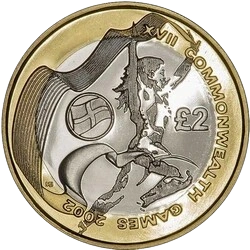
The 2002 Commonwealth Games England £2 is one of those coins that feels like it should be everywhere, yet somehow never appears when you actually want it. It was issued to celebrate the XVII Commonwealth Games held in Manchester in 2002, and it forms part of a four-coin mini series, one coin for each home nation. All four share the same energetic athlete design, but each one swaps in a different flag cameo. This England version carries the St George’s Cross.
In circulation-collector terms, this coin sits in a sweet spot: modern enough that many people remember using it in everyday spending, but scarce enough that it doesn’t turn up in every handful of £2 coins. It is also a brilliant “gateway coin” because once you find one, you immediately want the other three. That is how collections quietly multiply while you swear you are “only keeping a few”.
The England coin is not the rarest of the four, but it is still a recognised key date for anyone building a UK £2 circulation set. If you enjoy the hunt, this one delivers: the design is easy to spot, the story is clear, and the payoff when it lands in your change is genuinely satisfying.
Key facts and specifications
- Year: 2002
- Type: circulating commemorative £2
- Theme: XVII Commonwealth Games, Manchester 2002 (England)
- Circulation mintage (England): 650,500
- Composition: bimetallic (cupro-nickel inner, nickel-brass outer ring)
- Weight: 12.0 g
- Diameter: 28.4 mm
- Thickness: about 2.5 mm
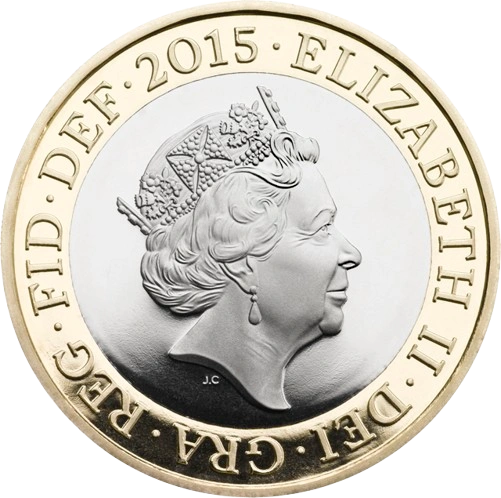
- Obverse portrait: Queen Elizabeth II, fourth definitive portrait
- Obverse engraver: Ian Rank-Broadley
- Reverse designer: Matthew Bonaccorsi
- Edge inscription: SPIRIT OF FRIENDSHIP, MANCHESTER 2002
A quick collecting note: you will see some lists rounding mintages to the nearest thousand. For this coin, the figure is commonly recorded as 650,500, and collectors usually treat that as the benchmark when comparing it with the Scotland, Wales and Northern Ireland versions.
The reverse design: an athlete, a banner, and track-lane symbolism
The reverse is a clever bit of graphic storytelling. You have a stylised athlete in motion, holding a raised banner. The figure is not drawn with realistic anatomy; instead, it’s built from clean shapes and segmented lines. Those lines are not random decoration. They are meant to echo the lanes of a running track, which makes the coin feel fast even when it is sitting still.
On the England version, the St George’s Cross appears as a circular cameo beside the figure. This is the key identifier. When you compare all four Commonwealth Games £2 coins side by side, your eye learns to look for the flag circle first. It becomes almost like spotting a trading card symbol: one glance and you know which variant you have.
Lettering on the reverse includes the denomination and the event title, with the designer’s initials tucked in as well. In decent condition you will normally see:
- £2
- XVII COMMONWEALTH GAMES 2002
- MB (for Matthew Bonaccorsi)
Condition tip: the highest points on this design tend to be parts of the athlete and the banner edges. On well-circulated coins those areas smooth down first, while the recessed track-lane lines often remain visible for longer.
The obverse: Elizabeth II’s fourth portrait and why it matters
The obverse carries Queen Elizabeth II’s fourth definitive portrait, the one created by Ian Rank-Broadley. Collectors often use portrait eras as a way to date and organise modern UK coins, because they provide a clean timeline across multiple denominations.
This portrait shows the Queen wearing the Girls of Great Britain and Ireland tiara, and it is usually paired with the familiar Latin legend. You do not need to memorise the full inscription to collect confidently, but recognising the “IRB” initials is handy because it confirms you are looking at the correct era and not mixing it up with later portraits.
In hand, the Rank-Broadley portrait often shows wear in the hair detail and facial features before the lettering becomes weak. A coin with strong hair texture and sharp legend is generally a nicer example for a circulation set.
The edge inscription: SPIRIT OF FRIENDSHIP, MANCHESTER 2002
The edge inscription is one of the most satisfying parts of modern £2 coin collecting because it feels like a secret message hiding in plain sight. For the Commonwealth Games series, the inscription reads:
SPIRIT OF FRIENDSHIP, MANCHESTER 2002
It is a perfect fit for the Commonwealth Games, which are as much about shared culture and sportsmanship as they are about medals. The inscription is incuse, meaning the letters are cut into the edge rather than raised. In low light it can look faint, so tilt the coin under a lamp and rotate it slowly.
Collector reality check: partial or slightly weak lettering is common on coins that have circulated for years. That alone does not mean you have an error. What you want to look for is consistency: even spacing, a clean milled edge, and lettering that makes sense when you read around.
Manchester 2002: why this event got four £2 coins
The 2002 Commonwealth Games were a major moment for UK sport, and Manchester hosted them with the kind of national spotlight usually reserved for much larger global events. Issuing a single commemorative coin would have been straightforward, but the decision to make four related designs added a layer of identity and collectability.
Each home nation got represented through its flag cameo, which made the series feel inclusive and distinctly “UK”. It also turned a single commemoration into a set-building challenge. Whether that was intentional marketing genius or a happy side effect, it worked. People who normally ignore coins often remember “the one with the flag”, and collectors love any excuse to build a matched quartet.
The athlete design itself is deliberately universal. It does not lock the coin to a single sport. Instead, it captures the idea of competition and celebration, which means it has aged well. Two decades later, the design still reads as modern.
Mintage and scarcity: where the England coin sits in the set
With a circulation mintage of 650,500, the England Commonwealth Games £2 is firmly in “scarce in change” territory. It is not the rarest of the four, but it is not a casual find either. Most collectors experience it as a coin that appears in bursts: you can go ages without seeing one, then suddenly spot two within a month, then nothing again.
The wider point is that the four Commonwealth Games £2 coins are all relatively low mintage compared with many other £2 commemoratives. That is why they consistently show up on rarity lists and why they remain popular targets for pocket-change hunting.
If you are building the full set, many collectors start with whichever coin they find first and then chase the others in order of difficulty. The Northern Ireland coin is widely treated as the toughest, but the England coin still earns its place as a key tick on the checklist.
How to identify the England variant quickly
You can identify this coin in seconds once you know what to look for. Here is the fast method used by people who sort a lot of £2 coins:
- Step 1: Look for the athlete holding a banner and the track-lane lines.
- Step 2: Find the circular flag cameo. For England it is the St George’s Cross.
- Step 3: Check the date (2002) and, if you like, confirm the edge inscription.
Common mix-up: sometimes people confuse the Commonwealth Games design with other “figure in motion” commemoratives at a glance. The giveaway is the combination of track-lane lines and the flag circle. Once you have seen it a few times, it becomes unmistakable.
Value guide: what influences the price
Values for modern circulating £2 coins move around because the market is driven by condition, demand, and the usual online price optimism. The England Commonwealth Games coin typically sells for more than face value, and in nicer condition it can command a stronger premium.
Here are the factors that matter most:
- Grade and eye appeal: fewer scratches, cleaner fields, and a sharp rim increase desirability.
- Edge knocks: £2 coins pick up rim dents easily; collectors dislike them because they stand out in trays and albums.
- Clarity of the reverse: if the athlete and lane lines still look crisp, the coin feels “fresh”.
- Presentation: coins from official packs or sets often bring higher prices than loose circulated examples.
- Timing: bursts of social-media attention can temporarily inflate prices.
A practical way to keep your expectations realistic is to compare completed sales rather than active listings. Active listings tell you what someone hopes to get. Completed sales tell you what someone actually paid.
For collectors building a basic circulation set, a decent circulated example is usually “good enough”. The real fun comes from upgrading: keeping the first one you find, then swapping it out later for a cleaner example when one turns up.
Condition checklist: what to inspect before you store it
When you find one in change, give it a quick inspection under decent light. You are not trying to turn into a grading robot; you are just deciding whether it is a keeper, an upgrade candidate, or a swap piece.
- Reverse high points: check the athlete’s head and the banner edges for flattening.
- Field scratches: open areas on the inner disc show marks easily.
- Flag cameo: the St George’s Cross should be clear, not blurred into the background.
- Outer ring: look for heavy discolouration or damage around the rim.
- Edge lettering: readable is nice, but even and consistent is more important.
If your coin has a couple of heavy rim dings, keep it anyway. A low mintage coin with knocks still fills the album slot and can be upgraded later. Collecting is a marathon, not a one-coin exam.
Building the four-coin Commonwealth Games set
The England coin makes most sense as part of the wider four-coin series. The design stays consistent, and only the flag cameo changes. That means you can build a tidy display that looks unified rather than random.
A simple display idea: mount the four coins in a row and label them by nation. Because the reverse is so similar, your eyes immediately jump to the flag circles. It becomes a clean visual story: one event, four identities, one shared celebration.
If you are collecting purely from circulation, the set might take time. If you are willing to buy or swap, it becomes a fun short-term goal. Either approach is valid. The only wrong approach is pretending you can stop at one.
Errors and myths: what is worth paying attention to
Modern £2 coins attract a lot of “error” claims online, and most are just wear, damage, or misunderstanding. For this coin, the sensible checks are straightforward:
- Rotated dies: if the obverse and reverse alignment is dramatically off, that can be interesting.
- Weak strike vs wear: a weak strike usually looks soft in specific areas, while wear tends to affect all high points more evenly.
- Edge inscription oddities: uneven or partially missing lettering can happen, but a completely absent inscription is unusual and deserves a closer look.
- Post-mint damage: gouges, heat damage, and chemical staining are common and usually not collectable.
If you suspect something unusual, take clear photos of both sides and the edge in natural light. Compare it to a normal example. Most “mysteries” solve themselves at that stage.
Authenticity basics: avoiding bad buys and obvious fakes
£2 coins are among the more commonly counterfeited UK coins, so it is worth knowing the basics if you buy online or at markets. A genuine coin should have a crisp bimetal join, clean milling, and detail that looks struck rather than cast.
- Look at the edge: muddy milling and messy lettering are warning signs.
- Check the surfaces: cast fakes often look slightly “bubbly” or granular compared to struck metal.
- Inspect the join: gaps, odd seams, or inconsistent colour between ring and centre can be suspicious.
- Trust good photos: if a seller avoids showing the edge or uses blurry images, walk away.
For a low mintage circulation coin, the safest approach is often the simplest: try to find it in change, or swap within collector circles where authenticity and reputation matter.
Storage and care: keep it nice without overdoing it
Once you have the coin, the goal is to stop it from getting worse. £2 coins stored loose in tins continue to pick up scratches and rim knocks. A basic album, a 2x2 holder, or a £2-sized capsule is enough protection for most collections.
Avoid cleaning. Cleaning usually removes the natural surface and leaves hairline scratches that stand out under light. Collectors prefer honest wear over artificial shine. If the coin is grimy from circulation, a gentle rinse in plain water and careful pat-drying can be safer than any polishing product, but even then, many collectors simply leave the coin alone.
Quick FAQs
Is this coin a standard £2 design?
No. It is a commemorative design issued for circulation, part of the Manchester 2002 Commonwealth Games series.
How do I know it is the England version?
Look for the circular flag cameo. England uses the St George’s Cross.
What should the edge inscription say?
SPIRIT OF FRIENDSHIP, MANCHESTER 2002.
Is it worth keeping if it is worn?
Yes. Even worn examples are popular in circulation sets because the mintage is low. You can always upgrade later.
Should I collect all four Commonwealth Games £2 coins?
If you enjoy tidy mini sets, this is one of the most satisfying modern £2 groups to build. The design matches, the flags differentiate, and the hunt is genuinely fun.